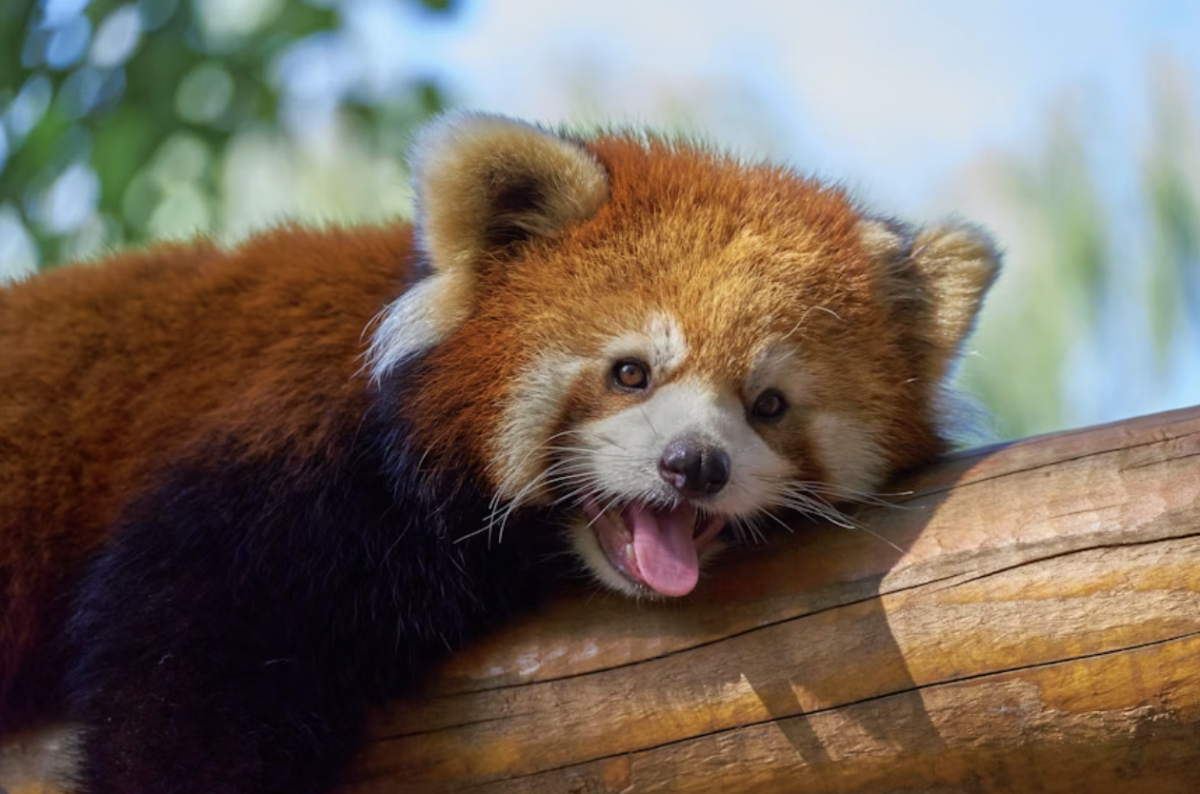
When you think of pandas, you may think of these large white and black animals that love bamboo. Many people don’t think of the smaller creatures that also carry the word panda in their names: the red panda.
The lesser panda, or more commonly known as the red panda, is a small arboreal mammal native to southwestern China where, according to Sichuan Travel Guide, “the number of red pandas living in the wild is estimated to be around 6000-7000 in China.” The nickname “lesser panda” originated from their size difference in comparison to the white and black pandas, and the historical confusion of being related–which they are not.
The coat of a red panda is rusty-like and provides for camouflage in the wild, which is discussed in a Smithsonian Magazine article which states, “Their color helps them blend in with their surroundings.” They also live shorter lives, usually living up to 10 years in the wild and up to 20 years in captivity.
Red pandas are relatively small animals, eating mainly bamboo, along with other foods when bamboo is scarce. According to Smithsonian’s National Zoo and Conservation Biology Institute, “Adult red pandas typically weigh between 8 and 17 pounds and are 22 to 24.6 inches long.”
Though they are small critters, they are very skilled and talented animals. They have specialized abilities that make them quick on their feet and allow them to climb easily. These creatures possess a “false thumb,” which is an enlarged bone in the wrist that grants them extra support or grip. Along with this “fake thumb,” they also have intense flexibility, making them one of the only animals who can climb down trees head-first! Climbing has gotten quite easy for these small creatures who constantly stay high!
Red pandas thrive off living and climbing trees, and unfortunately, the biggest threat to them is deforestation. Many of these wild animals are losing their homes by the day. Along with deforestation, illegal fur trading has also become a factor in the decline of the red panda, and the fault lies in our hands. Even after all this, hope is not lost yet.
As of right now, the red panda is classified as an endangered species and is declining at an alarming rate, with less than 10,000, and possibly as few as 2,500 left on Earth. Red Panda Network is a non-profit organization dedicated to the conservation of wild red pandas and their habitats! This network offers many options to help conserve red pandas, so whether you decide to donate or help spread awareness, red pandas can still be saved!