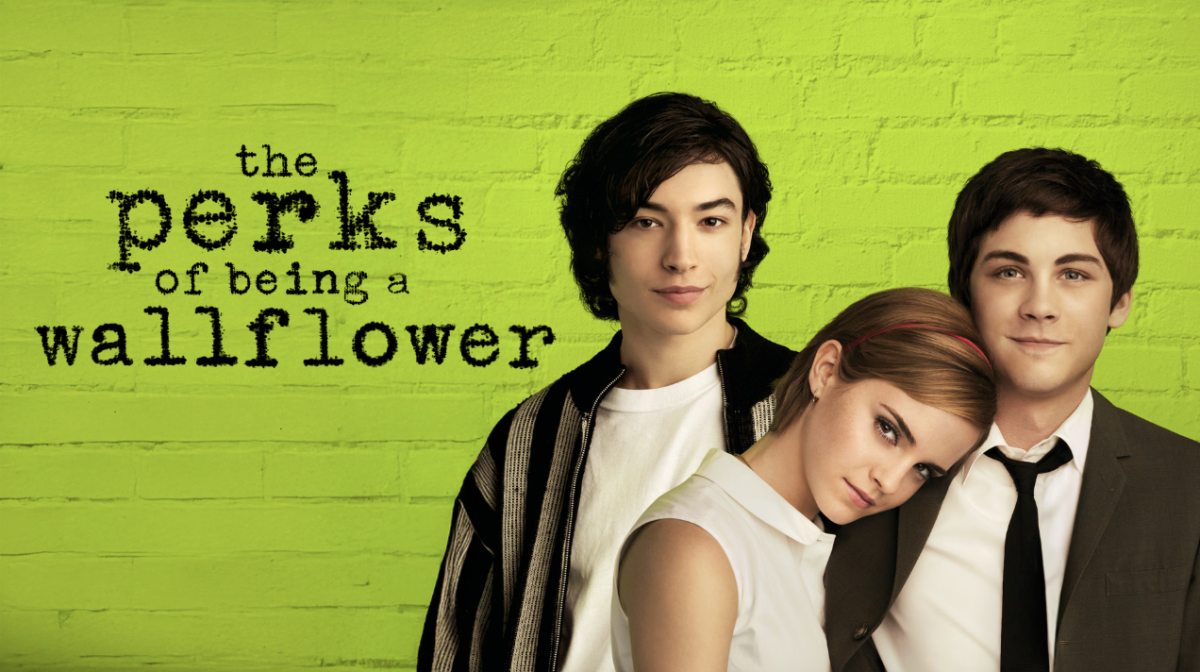
“The Perks of Being a Wallflower” is a coming-of-age drama film that touches on heavy topics like teen bullying, PTSD, and abuse. The movie, which is based on the novel of the same title, premiered on Sept. 21, 2012 and, in my opinion, is one of the best movies to have ever graced the big screen!
From the many messages and themes of the film to the cinematography and the acting, everything was so beautifully written and approached in such an extraordinary way. The soundtrack was phenomenal, and I am sorry to “Stranger Things” fans, but “Heroes” by David Bowie was featured in this movie first, and I personally believe it was the better usage of the song.
The film surrounds high school freshman Charlie Kelmeckis, played by Logan Lerman, and his journey navigating through his trauma while also being embraced by a group of seniors.
When Sam (played by Emma Watson) learned that Charlie’s only friend, Michael, had committed suicide earlier that year, she and her step-brother Patrick (played by Ezra Miller) raised a toast to him, which officially integrated him into their island of misfit toys. As Patrick toasted to Charlie, he stated, “You see things and you understand. You’re a wallflower.”
For those who don’t know, someone who is a wallflower is someone who is quiet and observant—not someone who directly participates in the world around them. This might be confused with someone who is shy or standoffish, but it really is just someone who chooses to observe the people around them and to understand.
The movie opens up with Charlie saying he does not want to “get bad” again, and viewers don’t know what really happens to him until the end of the film. So, the whole time people are watching the film, they know that there is something being left out as to why Charlie is the way he is. He’s deeply empathetic and cares too much about the people around him which ultimately leads him to place their needs above his own.
There are many instances in the film where Charlie can only see the pain of others. For instance, he saw Patrick’s hidden pain when he could only love Brad (played by Johnny Simmons) behind closed doors. He also saw Sam’s past of being taken advantage of. Charlie asked his English teacher why nice people choose the wrong people to date, to which Mr. Anderson (played by Paul Rudd) responded, “We accept the love we think we deserve.” This line alone was so soul crushingly devastating that, no matter what number rewatch I’m on, it always gets me.
The first time I watched this movie, I just felt sympathetic for Charlie. I didn’t really pay attention to the meaning or really anything about the film other than what was in front of my eyes. However, I eventually watched it again, and I slowly started piecing together why director Stephen Chbosky (who also wrote the novel) made certain choices. For example, Charlie’s flashbacks, or him “seeing things,” only happen when he gets bad. By getting bad, I’m referring to when his trauma takes over, and he begins to spiral until he blacks out.
Now, Charlie’s trauma is no small thing. His Aunt Helen, played by Melanie Lynskey, was his favorite person in the world. Charlie mentioned to Sam a couple of times that his Aunt Helen lived a horrible life, and in many of the flashback scenes, it was seen that she had attempted to act inappropriately toward Charlie.
However, it wasn’t until the end of the film that Charlie’s parents and viewers found out that his Aunt Helen was sexually abusing him as a child. Keep in mind, the movie is from Charlie’s point of view, so we don’t learn this because Charlie is learning it with us. That’s the thing about trauma: a common coping mechanism is for the mind to suppress the memories, and throughout the film, he only thought highly about her, especially since she died in a car accident on his eighth birthday.
In a change of direction, the most well-known scene from this film is the tunnel scene. This is where “Heroes” plays. There are two tunnel scenes: the first one is in the beginning of the film, and the second one is at the end of the film. It reflects the character development between Charlie and Sam.
The two scenes almost mirror each other, except for the fact that Sam and Charlie traded places. In the first tunnel scene, Sam is the one standing on the back of the truck, while in the second, Charlie is the one standing. In both scenes, Patrick is driving. This is how the film concludes, with Charlie’s final words to the audience being, “And in this moment, I swear. We are infinite.” Charlie’s entire monologue at the end was just so—I can’t even describe it. It was euphoric.
There are many other characters in the film, and so much more that can be talked about. But, honestly, you should experience it on your own if you haven’t seen it already. The film deeply resonates with teenagers, but adults who still remember what it was like to be young also felt the impact of this movie. Every time I watch it, I feel infinite.